The Cold Email Formula That's Actually Working in 2026
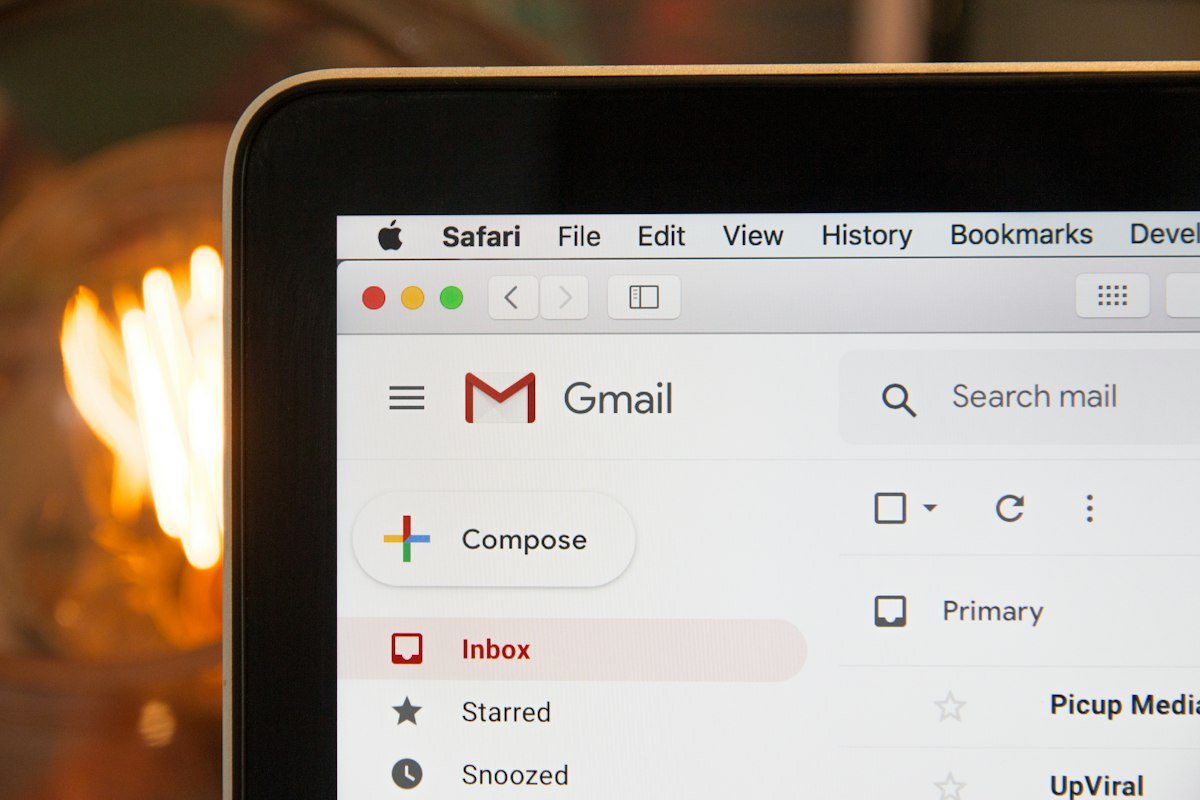
I want to start with a number that should get your attention: the average professional receives 121 emails per day. Of those, roughly 40% are unsolicited. And the average time a person spends deciding whether to open, ignore, or delete a cold email is about two seconds.
Two seconds. That is the entire window you have to make a first impression with cold outreach.
Given that reality, it would be reasonable to conclude that cold email is dead. Plenty of people have made that argument over the last decade. They have been consistently, demonstrably wrong. Cold email is not dead. Bad cold email is dead, and there has never been more of it. That actually makes the situation an opportunity for anyone willing to learn what works now.
I have talked to hundreds of entrepreneurs and sales professionals on The Prospecting Show about what is driving their pipeline, and cold email keeps coming up as a top channel. Not generic mass email, but a specific kind of outreach that is short, sharp, relevant, and built around a clear signal that something has changed for the prospect. That is what gets replies in 2026.
This post is the formula. Everything that follows comes from watching what actually works, not what sounds good in theory.
Why Most Cold Emails Fail Before They're Even Read
Before we get to the formula, it is worth understanding the failure modes, because the biggest mistakes happen before you write a single word of the email itself.
Mistake one is sending to a bad list. Cold email math is brutally simple: if you send 100 emails to the wrong people, you get zero replies no matter how good the copy is. Most salespeople underinvest in list quality and overinvest in template polish. The relationship is backwards. Spend more time identifying the right fifty people than you spend writing the email you will send to them.
Mistake two is writing with no reason to reach out. The single most common cold email in existence starts with some variation of "I came across your company and thought you might be interested in..." That is not a reason to reach out. It is an admission that you have no real reason to reach out. A genuine, specific reason to send this email to this person on this day is not optional. It is the foundation the entire message rests on.
Mistake three is writing too much. The average cold email that gets a reply is under 100 words. The average cold email that gets deleted is over 200. This is not a coincidence. A long email signals that you are about to make a big ask of someone who does not know you yet. A short email signals that you respect their time and know what you want. Length is itself a message, and the wrong length is the wrong message.
The Formula: Four Components That Work Together
Every cold email that generates a reply has four elements working together. Miss one and the whole thing falls apart. Get all four right and reply rates north of 20% are achievable on a warm, well-researched list.
Component 1: The subject line. Your subject line has one job: get the email opened. Not to sell, not to impress, not to demonstrate expertise. Just to earn the open. The subject lines that work consistently are specific and low-pressure. They reference something real about the prospect, pose a genuine question, or hint at something valuable without overpromising. Short wins. Five words or fewer outperforms everything longer. What reliably kills open rates: anything that sounds like marketing copy, excessive punctuation, all caps, and vague teases that feel manipulative.
Working examples: "Question about [Company]'s Q3 expansion" or "Saw you just hired a VP of Sales" or "Quick question, [First Name]". These work because they are specific, they do not oversell, and they create genuine curiosity.
Component 2: The opening line. The opening line must do two things simultaneously: prove you have done homework and immediately make the email about them, not about you. The fastest way to lose a cold email is to open with anything about your company, your product, or your credentials. Nobody cares yet. You have to earn the right to talk about yourself, and you earn it by demonstrating that you see something specific about their situation.
The opening line formula is simple: reference something real and recent. A funding announcement, a new hire, a LinkedIn post they published, a product launch, a market shift in their industry. Something that makes it clear this email was written for them and could not have been copy-pasted to a thousand other people. Even in a world of AI-assisted outreach, specificity is the signal that separates a real email from a sequence.
Component 3: The one-sentence value prop. After the opening line, you have about fifteen words to say what you do and why it might matter to this person specifically. One sentence. That is the constraint. Not a paragraph about your platform's features. Not a list of client logos. One sentence that connects a problem they plausibly have to an outcome you can deliver.
The template: "I help [specific type of company] [achieve specific outcome] without [common frustration]." That structure forces you to be specific about who you serve, what you deliver, and what makes you different, all in a single sentence. If you cannot write that sentence cleanly, you do not have a tight enough value prop yet, and no email formula will save you.
Component 4: A low-friction CTA. The call to action is where most cold emails make a fatal error. Asking for a thirty-minute call in the first email is asking for too much from someone who does not know you yet. You are essentially asking them to commit time and attention before you have given them any reason to trust that the investment will be worthwhile.
The best CTAs in cold email are single-question asks that take less than a minute to respond to. "Is this something your team is currently focused on?" or "Would it be worth a quick 10-minute call to see if there is a fit?" are both low-friction because they invite a yes or no, not a calendar commitment. If the answer is yes, you have earned the next step. If it is no, you have learned something valuable about the timing.
Three Scripts You Can Use This Week
Here are three full cold email templates built on this formula. Each one is under 100 words and designed for a specific trigger.
Template 1: The Hiring Signal
Subject: Saw you're building out your sales team
Hi [Name],
Noticed [Company] just posted three new SDR roles on LinkedIn. Congrats on the growth.
I help B2B sales teams ramp new reps faster by giving them a proven outreach playbook from day one, so they are booking meetings in week two instead of week six.
Is that the kind of thing you are working on right now?
[Your name]
Template 2: The Content Trigger
Subject: Your post on pipeline velocity
Hi [Name],
Your LinkedIn post last week on deals stalling after the second call was spot on. That is exactly where most B2B pipelines leak.
I work with revenue leaders to identify exactly where in the funnel they are losing qualified deals, and fix it in under 30 days.
Worth a 10-minute call to see if I can help?
[Your name]
Template 3: The Funding Signal
Subject: Congrats on the Series B
Hi [Name],
Just saw the news on [Company]'s raise. Well deserved.
Companies at your stage often tell me the same thing: the pipeline that got you here will not scale to where you are going. I help post-Series A and B teams build the outbound engine that does.
Is this on your radar right now?
[Your name]
The Follow-Up Cadence That Does Not Annoy People
The money is almost always in the follow-up. Most cold email conversations that eventually convert to meetings happen after the second or third touch, not the first. But there is a right way and a wrong way to follow up.
The wrong way is to send a chain of "Just bumping this to the top of your inbox" messages. That approach tells the prospect you have nothing new to add and you are just pestering them. It generates negative sentiment and trains them to ignore you.
The right way is to add value with every follow-up. Each subsequent message should either add new information, a different angle on the problem, a relevant piece of content, or a question that does not require them to have read the first email. If you cannot think of anything new to say, that is a signal to either wait longer or move on.
A cadence that works: day 1 is the first email. Day 3 is a one-line follow-up that adds a piece of social proof or a relevant insight. Day 7 adds a new angle or a short case study. Day 14 is a low-pressure breakup email that gives them an easy out while keeping the door open. After that, move them to a re-engagement sequence that runs quarterly rather than weekly. Some of my best conversations have started from a cold email someone sent six months prior that I finally had time to respond to because the timing was right.
One Mindset Shift That Changes Everything
The sellers who get the best results from cold email are not thinking about conversion rates. They are thinking about conversations. That is a meaningful distinction.
When you optimize for conversion rate, you optimize for volume and you start to see prospects as numbers in a funnel. When you optimize for conversations, you slow down, you research better, you write emails that feel like they are from a real person to another real person, and you follow up in ways that add genuine value rather than just creating noise.
The irony is that the conversation-first mindset consistently produces better conversion rates than the conversion-first mindset. Prospects can feel when an email was written for them versus when it was written for a CRM sequence. Authenticity is not a soft concept in cold outreach. It is a measurable performance driver.
Cold email is one of the few prospecting channels where you can go from zero to a meaningful conversation with any decision-maker in the world with a well-crafted message and 45 minutes of research. That is remarkable when you think about it. Do not waste it on templates that could have been sent by anyone.
If you want to dig deeper on what is working in outreach right now, subscribe to The Prospecting Show on Spotify or Apple Podcasts. New episode every week. And if you have a cold email that has been working well for you lately, I would genuinely love to hear about it at drconnorrobertson.com.
Dr. Connor Robertson is the host of The Prospecting Show, a Pittsburgh-based entrepreneur, and founder of Elixir Consulting Group. He has interviewed over 178 entrepreneurs on sales, business growth, and what it actually takes to build something that lasts.
Want More Insights from Dr. Connor Robertson?
Subscribe to The Prospecting Show for weekly interviews with top entrepreneurs and sales leaders.
▶ Listen on Spotify